Waste Bags Are Being Phased Out in Dublin: Frequently Asked Questions | Stoneybatter & Dublin 7
Dublin Is Moving from Waste Bags to Bins – Here’s What You Need to Know
Waste collection in Dublin is changing. Household waste will no longer be permitted in bags left on the street. Instead, all homes must use wheelie bins for waste disposal.
Following instruction by Dublin City Council (DCC), we want to advise customers in Dublin 7 that the long-standing derogation allowing the presentation of household waste in plastic bags will be phased out under Phase 3 of the city’s waste management transformation programme.
If you’re in an affected area, it’s important to switch before the deadline to avoid disruption to your collection service.
Frequently Asked Questions:
Who Is Affected?
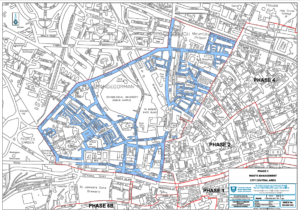
Dublin City Council is rolling out this change across the selected areas inside the blue line.
Why is Dublin City Council making this change?
Moving from bags to bins helps to:
- Reduce litter and improve street cleanliness
- Prevent waste from being torn open by animals
- Create a more consistent and environmentally friendly waste system
Is it safe for collection crews to handle refuse bags?
This is one of the most important and least discussed reasons for the transition. Collection crews can be regularly exposed to needles, broken glass and hazardous sharps concealed in refuse bags, with no way to identify contents before handling. This is an ongoing occupational health risk for the workers collecting waste on Dublin 7 streets every week. A sealed container system directly eliminates that risk; crews never need to handle loose, uncontained waste. Worker safety is a core reason the waste industry is moving away from bag-based collection nationwide, not a secondary consideration.
Will a caddy or bin block the footpath?
A 45L caddy occupies less footpath space than the equivalent bag collection for the same household. A full bag presentation on a typical Stoneybatter street, multiple bags piled on a narrow footpath, takes up considerably more surface area. A caddy is also a stable, upright object that does not blow over, leak, or scatter contents across the path the way a torn bag can.
I live in a terraced house with no side access. Will I be forced to use a large wheelie bin?
No. DCC has confirmed in writing that large wheelie bins will not be forced on households where they are unsuitable. Greyhound offers a 45L caddy designed specifically for terraced houses without side access or storage. It is compact, lightweight, and sits outside only on collection days, no dragging through the house required.
Why is this happening if illegal dumping is the real litter problem?
The transition actually addresses illegal dumping more directly than the bag system does. A loose bag can be dumped by anyone anywhere; a bin is registered to a specific address and cannot. Removing bags from circulation eliminates the cheapest and most accessible tool available to fly-tippers.
I was told I’d need six caddies to replace my current bag usage. Is that right?
No. A household producing approximately one general waste bag and one recycling bag per week requires one black caddy and one recycling caddy, not six. The tiered product range, from 45L caddy to 240L wheelie bin, is designed so that every household can find a size that accurately reflects their actual waste output.
This was tried in 2001 and reversed. Why will it work now?
The 2001 attempt was made without adequate resident communication, operator readiness, or legislative underpinning. All three are in place now. Bin designs are also lighter, more compact and more varied than they were 25 years ago, and collection routing technology has advanced considerably. The 2001 letter residents cite actually supports the current approach; it stated bags would continue only where bins are genuinely not practicable, which is exactly what DCC has committed to again in 2026.
Will bringing a bin through my house mark or dirty the floor?
There is a simple, low-cost fix already used for luggage and wheelchairs: a slip-on wheel sock that pulls over the bin’s wheels so the dirty surface never touches the floor inside. It goes on and off in seconds and is left by the back door once the bin is outside.
Won’t bins cause more disruption on collection day than bags do?
The opposite is true. A crew can empty a bin by machine in seconds, so collection trucks are in and out of a street faster and spend less time blocking it. Under the bag system, vehicles and crews work the streets around the clock dealing with litter and cleanup; set bin collections reduce that significantly. Waste goes out at a fixed time and is gone shortly after, meaning less left on the street between collections.
Are gull-proof bags not a simpler solution to the litter problem?
Foxes and rats tear through gull-proof bags with ease, so the bag format itself remains a problem regardless of bag strength. Loose bags also sit on the footpath around the clock; bags go out every day, not just on collection day, making enforcement against illegal dumping very difficult. It is hard to tell a legitimate bag from a dumped one.
Has this worked in areas with similar housing and narrow streets?
Yes. Communities across Dublin with comparable streets, the same kind of terraced housing and the same tight access have already made the transition, Cabra, Eastwall and Marino among them. The practical challenges in the north inner city are not unique, and the same common-sense solutions that worked in those areas are available here.
Is there any customer feedback in Dublin 7?
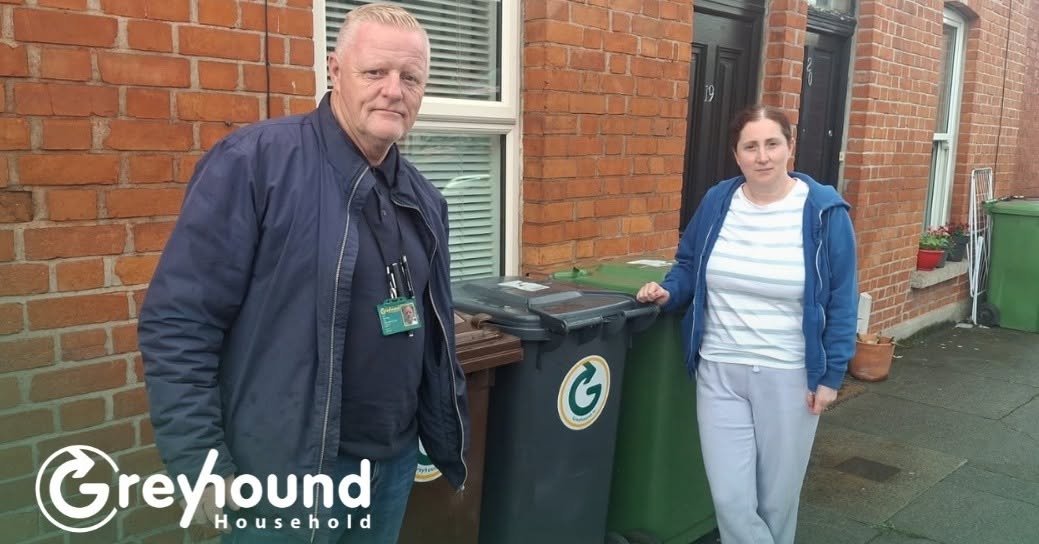
“The service from Greyhound has been great. The streets are a lot cleaner, and collections are spot on in the area.”
Denise, a local resident.
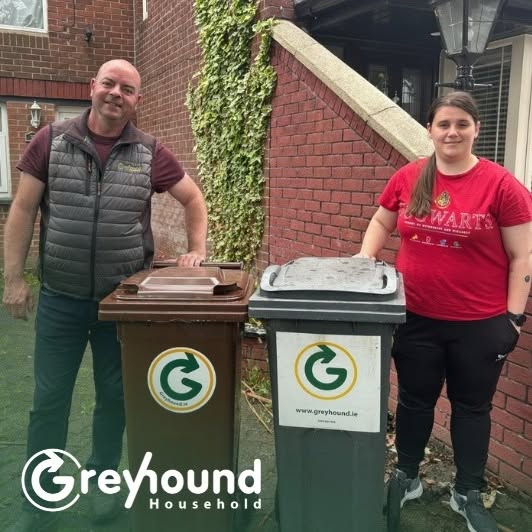
“Never any issues”
Nicole in Dublin 7.
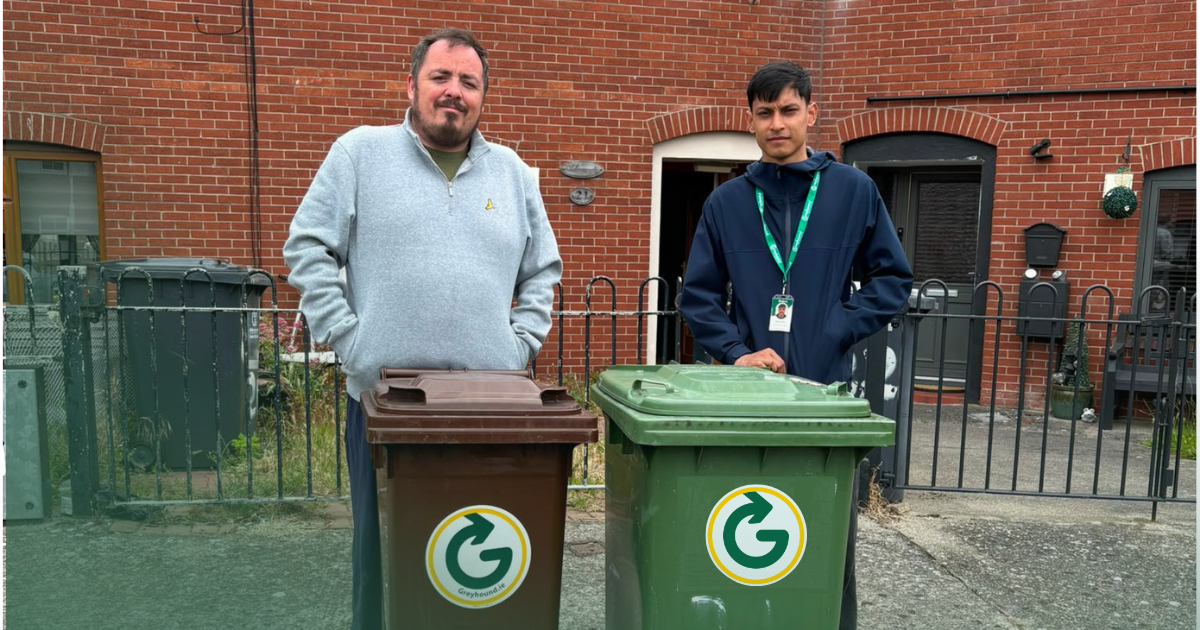
“Everything is great with the bins, never any issues. Collections are on time. Streets are much cleaner with bins.”
Keith, Montpelier Drive.
What size bins are available?
Every home is different; we know this. That’s why flexible bin sizes are available across all plans, so you can choose the option that works best for you & your home.
- 45-litre bin – Ideal for apartments or low-waste households
- 80-litre bin – Works for small or low-waste households
- 140-litre bin – Suitable for small to medium households
- 240-litre bin – Best for larger families or higher waste volumes
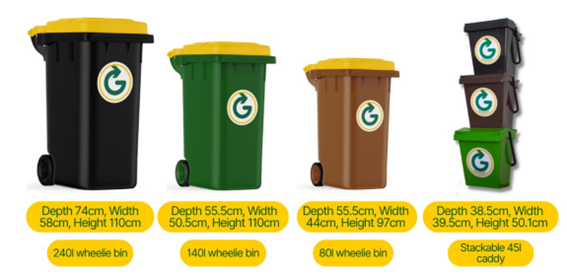
What do the waste stream colours mean?
- Black Bin – General waste
- Brown Bin – Organic/food waste
- Green Bin – Mixed recycling
What happens to any bags I haven’t used after the deadline?
Unused bags can be credited back to your new bin account.
How do I return unused bags?
You have two options:
- Hand them back to a Greyhound representative in person — our team is currently on the ground in the area and available to assist you directly.
- Post them back to us — our team will validate the returned bags and credit your account accordingly.